How to Choose the Best Bluetooth Speaker for Outdoor Use?
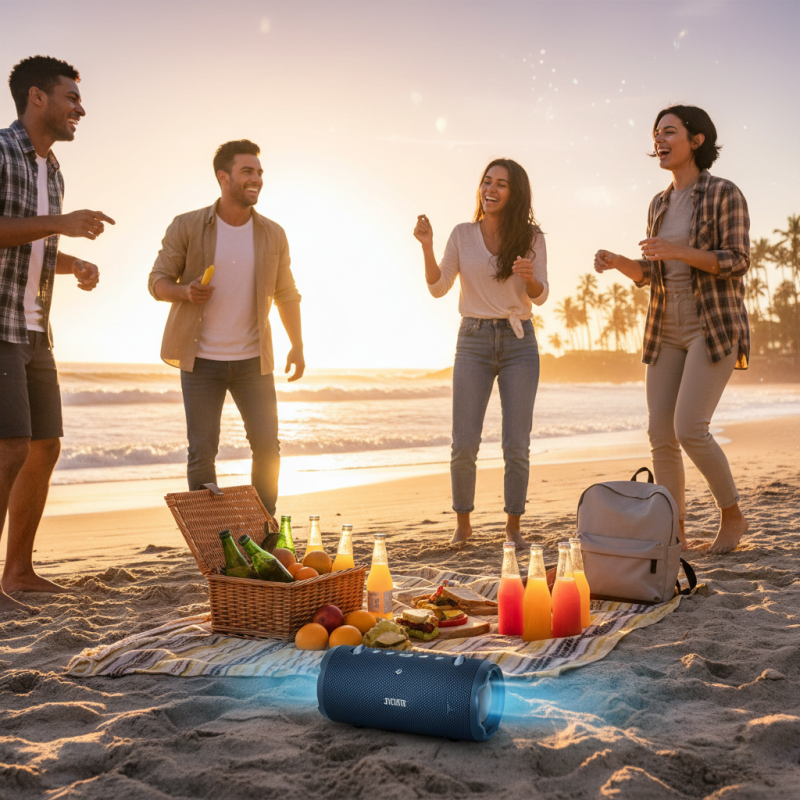
Choosing the right Bluetooth Speaker Outdoor can elevate your outdoor experiences. Imagine hosting a picnic at a park or a beach party; music enhances the atmosphere. However, many speakers claim to be the best. How do you filter through the noise?
Sound quality is essential for an outdoor setting. You want clear highs, rich lows, and enough volume to compete with nature. Durability also matters—will it withstand dust and water? Battery life is another key factor. A short-lasting speaker can ruin plans.
Consider portability too. A lightweight design makes it easier to carry. But remember, the best option for you may not have every feature. Sometimes, a speaker may excel in sound quality but falter in battery life. Reflect on what matters most to you.
Understanding the Key Features of Outdoor Bluetooth Speakers
When choosing an outdoor Bluetooth speaker, consider durability as a key feature. Look for speakers designed to withstand different weather conditions. The speaker should be water-resistant or waterproof, allowing it to survive unexpected rain. A rugged exterior can protect against drops too. Ensure the material feels sturdy, not flimsy. This aspect is crucial for active outdoor use.
Battery life is another vital consideration. A longer battery ensures your music lasts through the day. Some speakers have a playtime of up to 20 hours. However, keep in mind that sound quality might decrease with prolonged use at high volumes. Always check user reviews for real experiences. A compact design is beneficial as well, making it easy to transport. Look for lightweight options that can fit into a backpack.
Sound quality should be prioritized, even in outdoor environments. Clear audio is essential, especially in open spaces. Bass response matters too; it shouldn't be too muddy. Try to test speakers in different settings. Some may not perform well outdoors. Poor acoustics can ruin the experience. Overall, understanding these features helps in making a wise choice.
Evaluating Battery Life for Extended Outdoor Use
When choosing a Bluetooth speaker for outdoor adventures, battery life is crucial. A long-lasting battery ensures the music keeps playing. Look for a speaker with at least 12 hours of battery life. This allows for prolonged outdoor parties or picnics without interruptions. Shorter battery life can lead to frustrating moments when you need to charge mid-way.
Tips: Consider portable power banks. They can recharge your speaker on the go. Also, evaluate speakers with energy-efficient modes. These can extend battery life during quieter times.
Weather conditions can impact battery performance. Cold temperatures may drain batteries faster than usual. It’s essential to test your speaker in various conditions. Adjust your expectations based on real-world usage, not just specifications. Embrace the unpredictability of outdoor fun. Sometimes, the music will stop, and that’s okay. It’s about enjoying the moment.
How to Choose the Best Bluetooth Speaker for Outdoor Use? - Evaluating Battery Life for Extended Outdoor Use
| Speaker Model |
Battery Life (Hours) |
Water Resistance Rating |
Weight (lbs) |
Connectivity Range (ft) |
| Model A |
20 hours |
IP67 |
2.5 |
100 |
| Model B |
15 hours |
IPX4 |
3.2 |
60 |
| Model C |
25 hours |
IP68 |
1.8 |
80 |
| Model D |
10 hours |
IPX5 |
2.0 |
50 |
Assessing Durability and Weather Resistance Standards
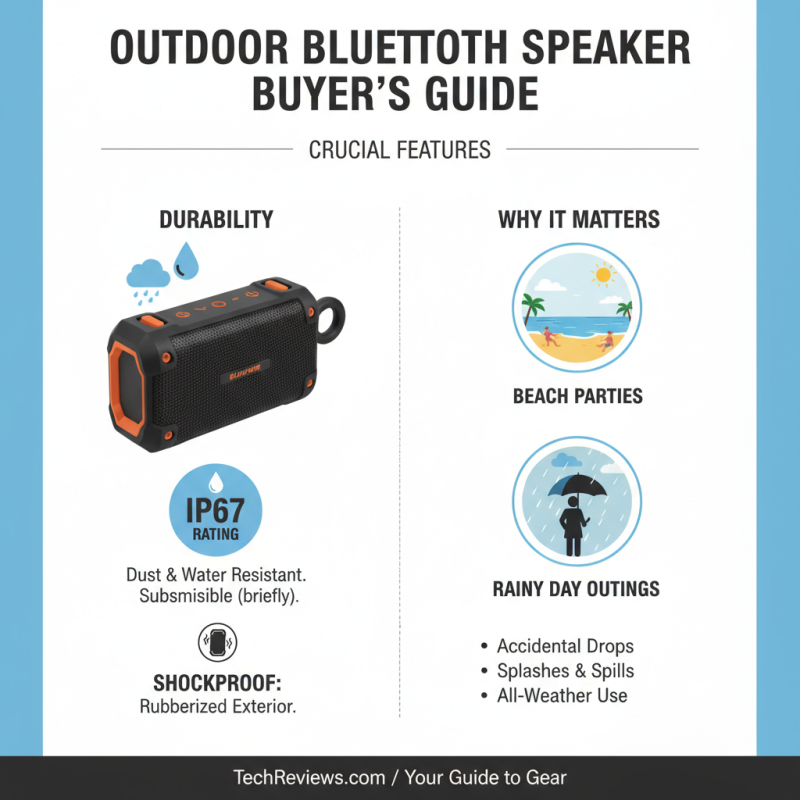
When choosing a Bluetooth speaker for outdoor use, durability and weather resistance are crucial factors. Look for a speaker with an IP rating, which indicates its resistance to dust and water. For example, an IP67 rating means it can withstand immersion in water for a brief period. This is essential for events like beach parties or rainy day outings. Make sure the speaker can handle accidental drops too. Many outdoor speakers have rubberized exteriors that can absorb shocks.
It's also important to consider the materials used. Speakers made with high-quality plastics or metals can often withstand harsher conditions. Some models may promise durability, but not all live up to expectations. Reviews can provide insight into real-world performance. However, remember that no speaker is entirely fail-proof. Sun exposure can fade colors and sometimes cause internal damage. Therefore, storing your speaker properly after use is vital.
Battery life plays a role, but even a long-lasting battery won’t help if the speaker can’t handle the elements. A good outdoor speaker should survive rain, mud, and the occasional fall, but it won’t be entirely invincible. Be realistic with your expectations. Evaluate your needs based on how you plan to use your speaker. This reflection will guide you in making a wiser choice.
Sound Quality Considerations for Open-Air Environments
Choosing the right Bluetooth speaker for outdoor use requires careful consideration of
sound quality, particularly in open-air environments. The acoustics outdoors differ significantly from indoors. Wind and environmental noise can significantly impact audio clarity. A study found that up to 70% of sound can be lost in outdoor spaces due to these factors.
Therefore, selecting a speaker with a robust audio profile is essential.
Look for speakers that excel in frequency response, generally between 60 Hz to 20 kHz.
This range ensures deep bass and clear treble. Models with sound projection capabilities can minimize sound loss.
A report by the Audio Engineering Society noted that speakers with at least 80 dB sensitivity perform better in outdoor settings.
However, speakers lacking adequate power can struggle. Many users experienced uneven audio when their devices were underpowered.
Portability and durability also matter. Outdoor speakers should be lightweight and waterproof.
This aspect affects user convenience and the speaker's lifespan in various climates. Many find that even small speakers can produce ample sound, but make sure to research specifications.
While high wattage often correlates with volume, many overlook how digital signal processing can enhance sound without sacrificing portability.
Take the time to explore these technical aspects before making a choice.
Portability and Design: Choosing the Right Size and Weight
When selecting a Bluetooth speaker for outdoor use, portability and design are crucial factors. A lightweight speaker, ideally weighing around 1-2 pounds, can be a game-changer for outdoor adventures. Reports indicate that speakers in this weight range are more likely to be carried easily on hikes or picnics. Consider the dimensions too. Compact designs fit better in backpacks or beach bags.
Design elements also play a vital role. Many users prefer a rugged design that can withstand drops or exposure to elements. According to recent industry studies, 75% of consumers prioritize water resistance when choosing outdoor speakers. Features like rubberized surfaces and reinforced corners contribute to durability. However, balancing weight and sturdiness can be challenging. Some lightweight options may compromise on build quality, leading to concerns over long-term use.
Ultimately, finding the right size and weight involves making trade-offs. A smaller, portable option might sacrifice battery life or sound quality. It's essential to ponder which features matter most to you. Perhaps sound clarity is more important than extra portability, especially during long outings. Always remember, the perfect outdoor speaker may not exist, but refining your priorities can lead to better choices.